Robotic laser welding – repeatability and production automation
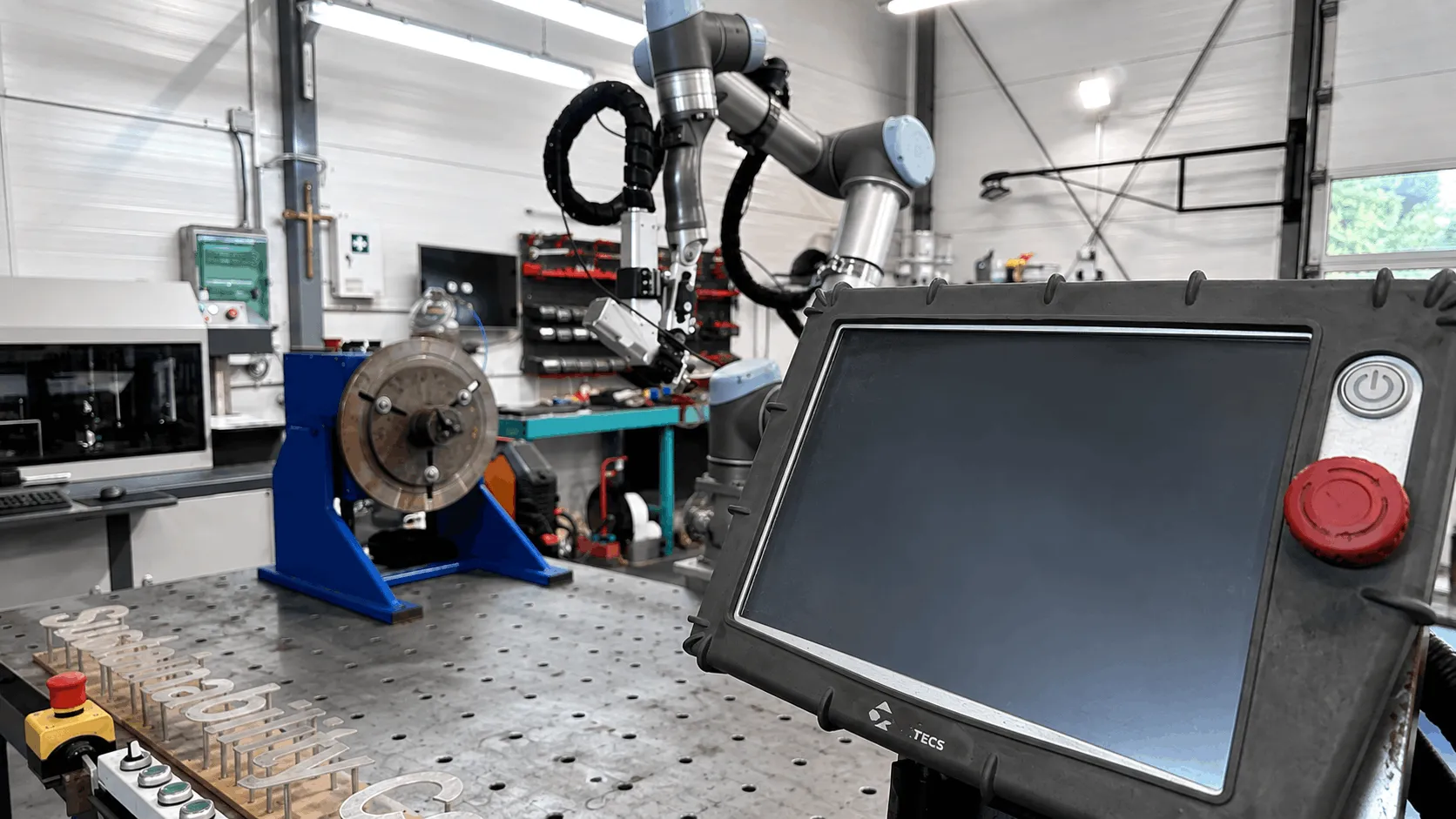
Robotic laser welding is for companies that need repeatability, precision and a stable production flow. Combining the laser with a Universal Robots cobot automates torch guidance and runs programmed operations along a defined path.
At MOSQITO the robot moves the tool along a programmed trajectory, with agreed motion and positioning. That matters for series production, repeat parts and components with defined quality requirements.
How does robotic laser welding work?
A Universal Robots cobot structures the process and reduces the effect of manual torch handling on joint repeatability. Once programmed, the same motion can be replayed on the next parts. Part preparation, accurate fixturing and welding parameters matched to the material also matter — scope is agreed from the documentation, with no parameters assumed in advance.
- 1. Preparation – parts, positioning and the robot path.
- 2. Parameters – laser and process settings for the material and weld geometry.
- 3. Trials – joint quality checked before the series.
- 4. Production – the programme used for further repeat operations.
Advantages of robotic laser welding
- Repeatability – programmed motion keeps the torch path consistent.
- Weld path – paths follow the prepared programme.
- Automation – fewer manual steps on repeat operations.
- Flexibility – programmes for different parts and jobs.
- Output – a structured process and shorter cycle time on selected operations when the project allows it.
Where it is used
- Series production of metal components
- Repeat structures and machine parts
- Housings and parts that need a precise weld path
- Automation where repeatability and shop-floor organisation matter
Want to discuss robotic laser welding?
We match the process to part geometry, weld requirements, fixturing and production conditions. Send the documentation — we will assess whether we can do it here.
- Phone: +48 730 270 214
- E-mail: biuro@mosqito.pl
- Quote: mosqito.com.pl/en/contact